

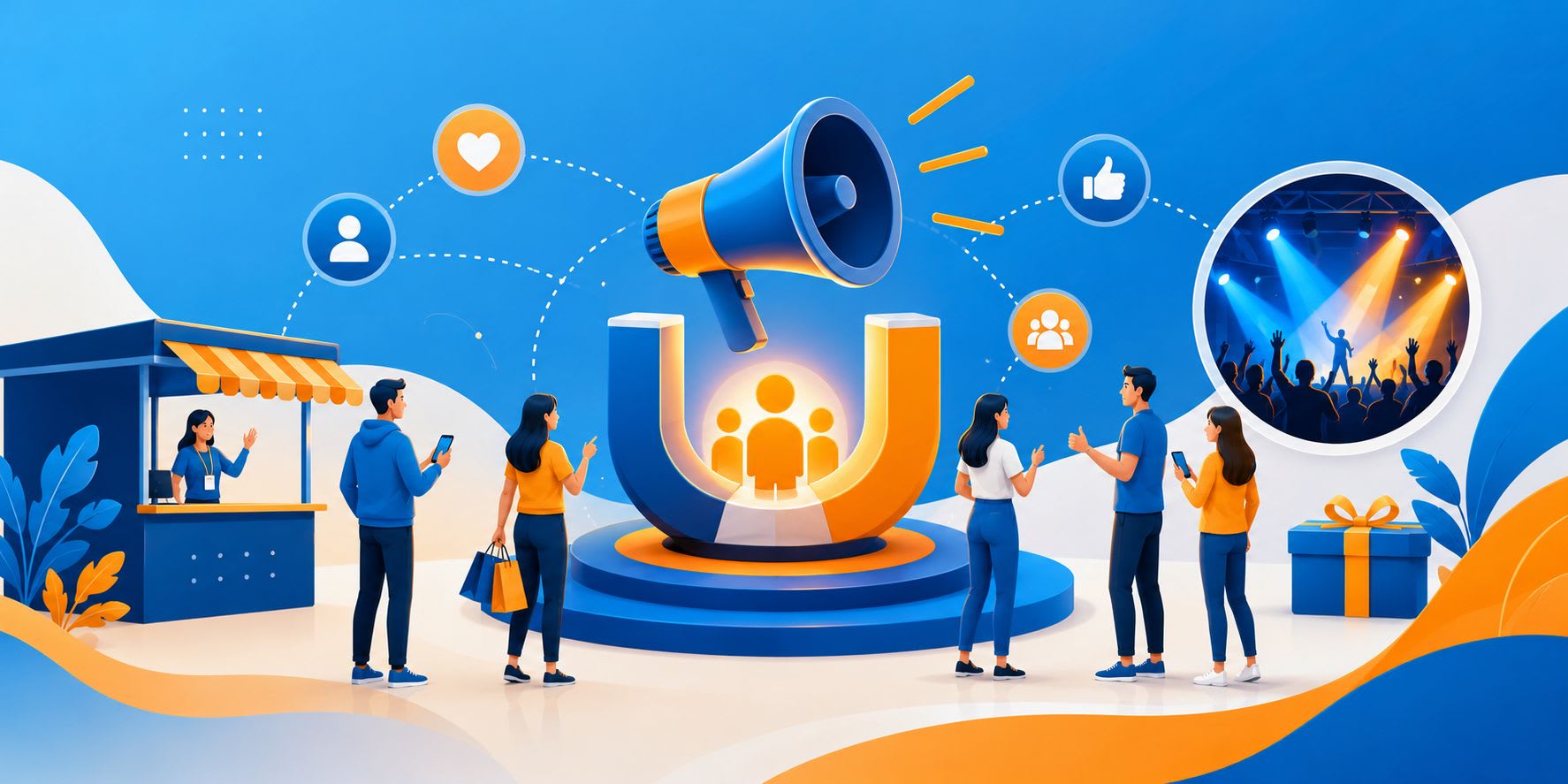
Brand Activation: Turning Marketing Strategy Into Real Customer Connection
Introduction
Every brand has a strategy on paper. You've defined your positioning, identified your target audience, and crafted messaging that resonates with their needs. But the gap between strategy and reality is enormous. Brand activation is the bridge that converts marketing plans into lived experiences that actually move people to pay attention, engage, and ultimately, buy.
Brand activation goes beyond advertising. It's the deliberate, multi-channel execution that brings your brand promise to life at moments when customers can tangibly experience it. Whether that's an event, a limited-time offer, a product launch, or an experiential campaign, activation is where strategy meets the real world. Without it, even the best-positioned brand remains abstract and forgettable.
Key Takeaways
- Brand activation transforms marketing strategy into tangible customer experiences
- Successful activation requires coordination across multiple channels and touchpoints
- The best activations align with your brand positioning and target audience psychology
- Measurement separates effective activations from expensive experiments
- Timing, authenticity, and customer-centricity determine activation success
- Activation works best when integrated with your broader marketing ecosystem
- Digital and physical activations increasingly overlap in modern campaigns
What Brand Activation Actually Is
Many brands confuse brand activation with simple promotion or advertising. While activations can include paid media, the real power comes from creating moments where your audience directly experiences your brand values and benefits. An ad tells people your brand is innovative. An activation shows them.
Consider a fitness brand launching a new product line. Running ads about the new products reaches people. But setting up a free trial event where potential customers experience the product firsthand, train with brand ambassadors, and feel the community around your brand. That's activation. They don't just hear about the product; they feel what it's like to be part of your brand.
This distinction matters because activation typically drives higher engagement and conversion rates than traditional advertising alone. When people actively participate rather than passively consume, they remember the experience, feel emotionally connected, and become more likely to share it with others. The investment in creating real experiences often delivers better returns than equivalent spending on ads.
The Strategic Foundation Before You Activate
Brand activation without strategy is just noise. Before you launch any activation campaign, you need clarity on what you're actually trying to activate. Are you introducing a new product? Building brand awareness in a new market? Shifting perception? Deepening loyalty among existing customers?
Each goal demands different activation approaches. A product launch might focus on trial and sampling. Building awareness in a new market might mean experiential events in high-traffic locations. Shifting perception might require thought leadership activations or content-driven campaigns. Getting this strategic clarity first prevents wasted effort on activations that look exciting but don't move your real business goals.
This is also where your broader marketing strategy becomes crucial. What channels is your audience actually using? What's your positioning relative to competitors? What objections do buyers have that you need to overcome? The answers to these questions shape everything about how you activate. Your activation is the tactical execution of your strategic plan.
Multi-Channel Activation: Where Digital and Physical Converge
Modern brand activations rarely live in a single channel. The most effective campaigns create a coordinated experience across digital and physical touchpoints. Someone might discover your activation through social media, visit your event location, take photos they share with their network, and then retarget them with relevant offers based on their engagement.
Social media serves as both discovery and amplification. Teaser content builds anticipation. Live updates during the activation extend reach to people who can't physically attend. User-generated content from participants amplifies the message further. Digital reviews and comments create ongoing conversation long after the event ends. The best activations are built to be "Instagram-worthy" not for vanity, but because they're designed to be naturally shareable.
Email and SMS connect with existing customers, making them feel like insiders. Landing pages and specialized content capture data from interested prospects. Retargeting ads reach people who engaged with your activation and move them toward conversion. When these digital elements work together with physical experiences, the impact compounds. Someone who attended your event and later saw a retargeting ad remembers both encounters, increasing likelihood of action.
Creating Activations That Actually Work
Successful brand activations share a few key characteristics. First, they're authentic to your brand. A luxury brand's activation shouldn't feel like a discount brand event. A young, edgy brand shouldn't try to feel corporate. The experience should feel like a natural extension of who you are, not a forced attempt to be something you're not.
Second, they're designed around the customer, not your marketing convenience. This means understanding where your audience actually spends time, what experiences matter to them, and what would genuinely excite them about your brand. Too many activations are created for other marketers to admire rather than for the actual target customer to enjoy.
Third, they're measurable. You need to know who participated, what they experienced, and what happened as a result. Did they make a purchase? Did they sign up for your email list? Did they follow your social account? Did awareness lift? Did perception shift? Without measurement, you can't prove ROI or learn what works for next time.
When to Partner With Specialists
While some brands manage activations in-house, the complexity of coordinating channels, securing locations, managing logistics, and executing at the right moment often requires outside expertise. The difference between a good activation and a great one often comes down to experience, relationships, and execution excellence.
This is where specialized brand activation agencies bring real value. They have relationships with venues, influencers, media partners, and other vendors. They've executed dozens or hundreds of activations and know what works in different contexts. They understand the operational complexity of bringing multi-channel campaigns to life simultaneously.
If you're planning a significant activation, you might want to find a top brand activation agency that understands your industry and has a track record with similar objectives. Look for partners who ask strategic questions first before jumping to creative ideas. The best agencies are strategists as much as they are executors. They'll push back on ideas that don't align with your business goals, and they'll propose activations built on research and customer insight rather than creative impulse.
The Long-Term Value of Activation
Activations are often viewed as one-time campaigns with short-term impact. But the most successful brands use activations strategically over time, building momentum and creating patterns that reshape how audiences perceive them. Each activation reinforces positioning, reaches new audience segments, and creates content and data assets that fuel marketing for months afterward.
The videos, photos, and testimonials from activations become content for your social channels, website, and ads. The email addresses collected become segments for future campaigns. The partnerships built with venues, influencers, and media partners open doors for future collaborations. The insights about what resonated inform the next activation. What looks like a single event is actually building blocks in a long-term brand strategy.
This is why measurement and learning matter so much. When you understand what worked and why, you can compound that learning into increasingly effective activations. Brands that treat activation as a strategic tool rather than a random marketing tactic see compounding returns. They become known for creating amazing brand experiences, which becomes part of their equity and makes future activations even more powerful.
Conclusion
Brand activation bridges the gap between what your brand claims and what customers actually experience. It's strategy made visible, positioning made tangible, and promises made real. When executed well, activations create memories that last far longer than any advertisement. They turn passive audience members into active participants and loyal advocates. The key is approaching activation strategically, measuring rigorously, and treating it as an investment in long-term brand equity rather than a short-term sales push. Whether you execute activations in-house or partner with specialists, the principle remains the same: give your audience a reason to believe in your brand by letting them experience it firsthand.
Frequently Asked Questions
Q: What's the difference between brand activation and advertising?
A: Advertising delivers your message to an audience. Brand activation creates an experience where your audience directly engages with your brand. Advertising is passive consumption; activation is active participation. An ad tells people about your product. An activation lets them try it, feel it, and become part of a community around it.
Q: How much should I budget for brand activation?
A: Activation budgets vary widely based on scale, location, and complexity. A local experiential event might cost $10K-$50K. A regional or multi-city campaign might run $100K-$500K. National or international activations can exceed that significantly. Budget should tie to your business goals and expected customer lifetime value. If activation drives high-value customers, the investment often pays for itself quickly.
Q: How do I measure activation success?
A: Measure both immediate and long-term impact. Immediate metrics include attendance, engagement metrics (photos, social mentions, sign-ups), and direct conversions. Long-term metrics include brand awareness lift, consideration changes, customer acquisition cost for people who experienced activation, and lifetime value of activated customers. Use pre- and post-activation surveys to measure perception shifts.
Q: Can activations work for B2B brands?
A: Absolutely. B2B activations look different (conference sponsorships, webinar events, VIP customer experiences, lunch-and-learns), but the principle is the same. Decision-makers are still human and still respond to experiences. Some of the highest-ROI activations happen at industry conferences where you create memorable experiences that influence purchase decisions made months later.
Q: Should all activations be in-person events?
A: No. Modern activations can be purely digital (social media challenges, virtual events, interactive web experiences), hybrid (combining digital discovery with physical participation), or entirely physical. Your activation format should match where your audience is and what type of experience aligns with your brand. Digital activations can reach massive audiences at lower cost. Physical activations create deeper emotional connections.
Q: How do I make sure my activation doesn't feel inauthentic?
A: Start with genuine strategy, not creative ideas. Ask what your brand honestly stands for and what experience naturally demonstrates that. Avoid forcing trends or trying to be something you're not. Authentic activations are built on real insights about your audience and real alignment with your brand values. If the activation wouldn't feel natural coming from your brand, it probably isn't the right one.
Q: What's the best timing for brand activation?
A: Timing depends on your goals. Product launches should activate around launch day for immediate trial and trial-to-purchase conversion. Awareness campaigns work well during relevant cultural moments or high-traffic periods. Seasonal brands activate during peak seasons. The key is coordinating timing across all touchpoints so media, events, partnerships, and digital efforts create momentum together rather than competing for attention.
Want to publish a guest post on aamax.co?
Place an order for a guest post or link insertion today.
Place an Order