

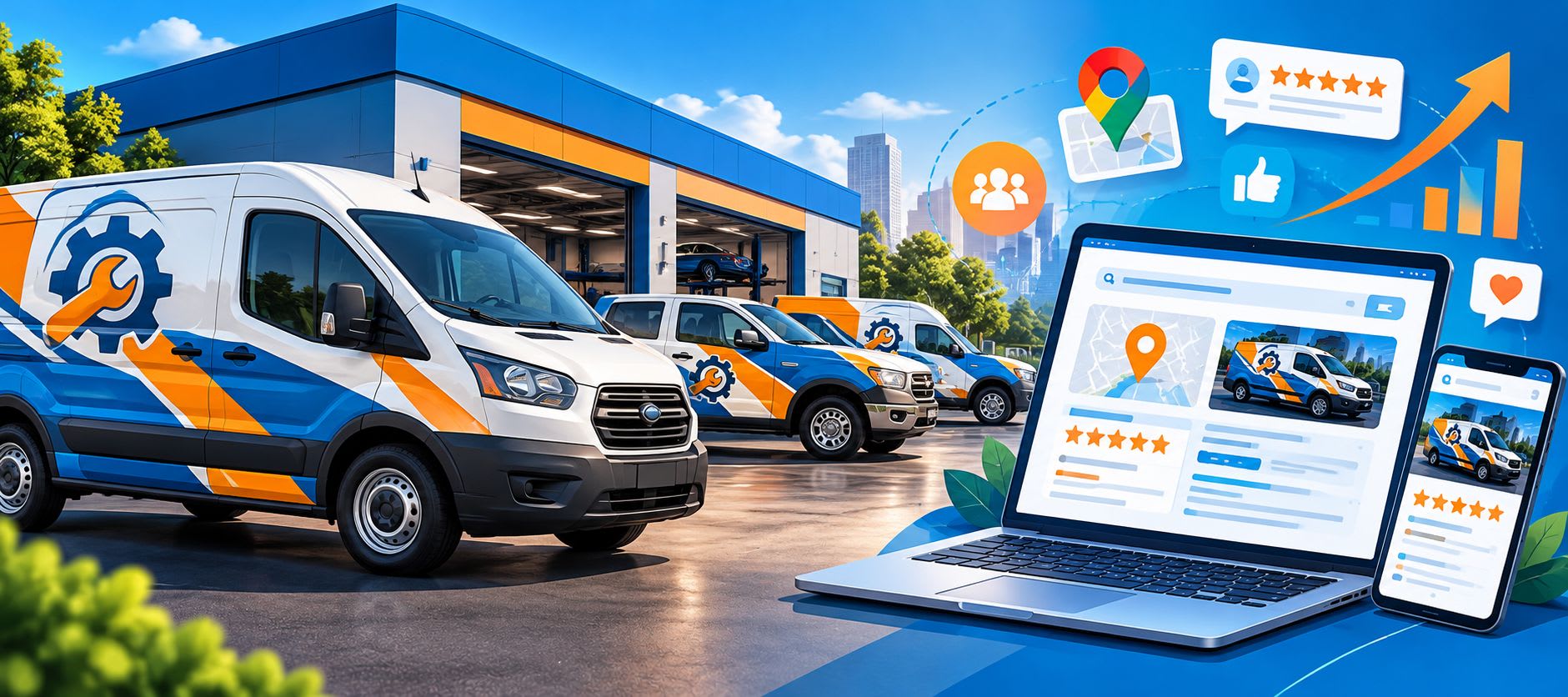
How Fleet Graphics Build Digital Authority for Auto Service Businesses
Vehicle wraps and fleet graphics have long been recognised as mobile billboards, but their impact extends well beyond roadside impressions. For mechanics, auto parts suppliers, and vehicle service companies, a professionally branded fleet creates tangible digital marketing advantages that influence search visibility, citation consistency, and local business authority. When a company's vehicles carry consistent branding across multiple locations and service calls, that visibility translates into name recognition that supports online search behaviour and citation accuracy.
The Connection Between Physical Branding and Local Search Performance
Local search algorithms prioritise businesses that demonstrate consistency across multiple touchpoints. When service vehicles display clear business names, phone numbers, and web addresses, they reinforce the same NAP (name, address, phone) data that appears in online directories and citation sites. This consistency matters because search engines cross-reference business information from dozens of sources to verify legitimacy and relevance.
Fleet graphics create physical proof points in the communities where a business operates. A delivery van wrapped with company branding that parks regularly at commercial addresses, a service truck that appears at residential job sites, or a parts vehicle that visits repair shops all generate real-world signals that align with the service area claims made in Google Business Profile and directory listings. The correlation between physical presence and claimed service territory strengthens local relevance scores.
Citation Accuracy and the Role of Visual Consistency
Citation building remains a foundational element of local SEO for automotive businesses. When mechanics and auto parts companies pursue listings on industry directories, review platforms, and business databases, the accuracy of those citations depends partly on how easily third parties can verify business details. Fleet graphics that display consistent contact information make it simpler for directory managers, journalists, and business partners to record accurate data.
Establishing a presence on relevant citation platforms for mechanics and auto parts businesses requires attention to detail and consistency. Branded vehicles contribute to this process by serving as a physical reference point that customers and business associates encounter before they search online or submit reviews. When someone sees a service truck multiple times and then searches for the company name, the familiarity speeds recognition and increases the likelihood they will engage with the correct listing rather than a competitor or outdated directory entry.
Typography and Contact Information Legibility
Effective fleet graphics balance brand identity with practical readability. Phone numbers should be large enough to read from at least 15 metres, with digits sized at a minimum of 10 centimetres in height for vehicles moving at urban speeds. Business names benefit from sans-serif typefaces at high contrast ratios—dark text on light backgrounds or reverse treatments with sufficient separation. Web addresses, while useful, should be secondary to phone numbers for service-based businesses where immediate contact drives conversions.
Mobile Medical Units and Specialised Vehicle Branding
Healthcare providers, corporate wellness programmes, and community outreach initiatives increasingly rely on mobile medical units to extend service access. These vehicles function as both clinical spaces and branding assets, requiring graphics that communicate professionalism, hygiene standards, and service capabilities. Unlike commercial delivery fleets, mobile medical vehicles must balance regulatory compliance with public trust signals, often incorporating professional certifications, service descriptions, and accessibility information into the wrap design.
Organisations planning mobile health initiatives should work with fabricators experienced in healthcare vehicle standards. custom mobile medical trailers offer flexibility for programmes that need to scale services across multiple locations without committing to permanent facilities. These units can be designed with specific clinical equipment, HVAC systems for temperature-sensitive supplies, and ADA-compliant access features while maintaining branding that aligns with the parent organisation's visual identity. The exterior graphics must meet local health department visibility requirements while conveying the clinical authority necessary for patient confidence.
Fleet Graphics as Content Marketing Anchors
Service vehicles create natural content opportunities that support broader digital marketing strategies. Before-and-after photos of fleet wraps provide visual assets for social media, blog posts, and email campaigns. Behind-the-scenes documentation of the wrap installation process demonstrates attention to quality and offers transparency that resonates with customers researching service providers. These assets also perform well in local news coverage, as media outlets frequently feature visually striking vehicle transformations or community service initiatives involving branded fleets.
The personal connection drivers feel toward their vehicles extends to commercial fleets as well. Vehicle customisation reflects individual and organisational identity, making fleet graphics a statement about company values and professionalism. For automotive businesses, this visual commitment to brand standards signals investment in quality that customers interpret as indicative of service standards.
Refresh Cycles and Brand Evolution
Fleet graphics typically maintain effectiveness for three to five years before fading, edge lifting, or brand updates necessitate replacement. Establishing a refresh schedule prevents the brand erosion that occurs when vehicles display outdated logos, faded colours, or peeling vinyl. Staggered replacement across a multi-vehicle fleet maintains visual consistency while spreading capital costs. Businesses should coordinate graphic updates with vehicle replacement cycles when possible, applying wraps to new vehicles before they enter service to maximise wrap lifespan.
Measuring the Digital Impact of Fleet Branding
Tracking the SEO contribution of fleet graphics requires indirect metrics since vehicle visibility does not generate clickable links or direct attribution. Businesses should monitor organic search volume for branded terms following fleet launches, as increased vehicle visibility typically correlates with higher branded search frequency. Call tracking numbers specific to fleet graphics can measure phone inquiries generated by vehicle sightings, while customer surveys during intake can identify how prospects first learned about the business.
Google Business Profile insights provide data on how customers find a business listing—through direct searches for the business name, discovery searches for services, or map browsing. Fleet graphics predominantly influence direct search volume, as people who see branded vehicles later search for the specific company name. An upward trend in direct searches following a fleet graphics rollout suggests that physical visibility is successfully driving digital engagement. Review volume and photo submissions from customers who mention seeing service vehicles also indicate that fleet branding is creating memorable impressions that motivate online interaction.
Integration with Broader Marketing Systems
Fleet graphics function most effectively when integrated with other marketing channels. QR codes on vehicle wraps can direct smartphone users to specific landing pages, though these should point to mobile-optimised destinations with clear calls to action rather than generic home pages. Social media handles displayed on fleet graphics encourage customers to follow company accounts, creating ongoing engagement opportunities beyond the initial vehicle sighting.
For businesses operating in multiple service territories, fleet graphics should reflect local market nuances while maintaining brand consistency. This might involve including specific service area indicators on vehicles assigned to particular regions, or featuring testimonials from customers in the neighborhoods where vehicles operate most frequently. The goal is to strengthen local relevance signals without fragmenting brand identity across the fleet.
Vehicle branding remains one of the most cost-effective marketing investments available to service businesses, generating thousands of impressions per vehicle per month at a fixed cost. When executed with attention to visibility standards, citation consistency, and integration with digital channels, fleet graphics build the physical authority that supports online search performance and customer trust.
Want to publish a guest post on aamax.co?
Place an order for a guest post or link insertion today.
Place an Order