

The Trust Signals That Help Local Websites Generate More Enquiries
Trust is the primary factor that influences a visitor's decision when choosing a local business. Within seconds of arriving at a local business' website, people will determine whether or not they can trust the business. In a split second, visitors will scan the page and try to identify some basic cues. At this point, visitors will either dial the phone number of the business or click the "back" button on their browser. While the quality of your products/services/experience may be exceptional, a local business' website needs to establish credibility (and quickly) through trust indicators. Fortunately, nearly all of these can be added at minimal or no expense to the business and can be used by almost all types of local businesses. From plumbing/dentistry/real estate agencies/accounting firms to virtually all other types of local businesses, trust indicators are beneficial.
Real Reviews, Shown Where People Decide
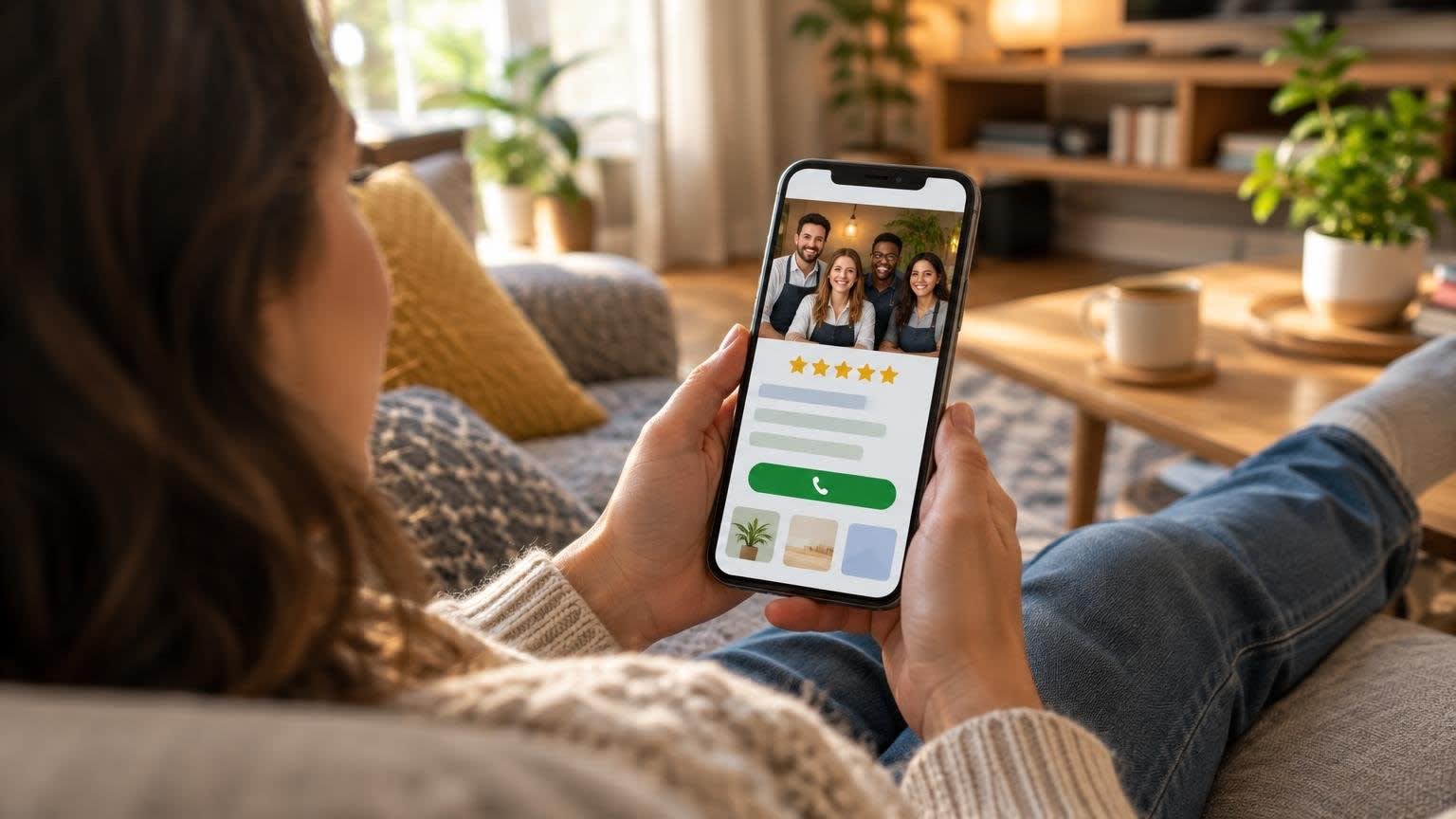
Genuine customer reviews are usually the very first thing that visitors look for. While a handful of reviews from local customers may appear to be superior to a page of marketing copy, the difference is that the former are from individuals like them and not from you.
Put your average rating and a few recent reviews near the top of your homepage and/or on each service page. Do not bury reviews on a separate testimonials page that rarely receives any views. Provide the reviewer's first name and suburb (where permitted), as a review from a person in a nearby street is much more believable than an anonymous quote. If you are collecting reviews via Google, embed/link to your reviews so that visitors can confirm that they are independent.
While having few reviews should not cause concern, make requesting reviews a regular part of your process. After completing a job, send a short message with a direct link to a review request. Many satisfied customers would be happy to assist, but they simply need encouragement and a convenient means to do so.
Negative reviews are also not something that you should become overly concerned about. In fact, responding calmly and professionally to a negative review may build trust among potential clients more than a perfect five star rating, which may appear suspect.
A Real Address, Phone Number and Faces
Customers want to know who they are dealing with. Ensure that your telephone number is easily accessible on every page of your website (ideally in the header) and ensure that it is tappable on mobile devices. If customers come to your physical premises, provide your street address. Alternatively, if you perform on-site work, indicate the regions you serve. Ensure that your business name, address and phone number are consistent across all platforms including Google Business Profile and directory listings, as inconsistent detail confuses customers and potentially reduces your presence in local search results.
Images of your employees, offices/buildings and vehicles are always better than generic stock images. A brief About Us page with employee names/faces/backgrounds transforms an impersonal business into tangible individuals that potential customers can envision meeting. Even a single image of the business owner with a brief statement describing them can enhance calls/enquiries, particularly in industries such as trades/home services whereby you enter customers' homes.
Proof That You're Active and Up to Date
There is no greater deconstructor of trust than a website that appears abandoned. An outdated copyright date on your website, an inactive blog dating back to 2021, or an empty "latest news" section will lead visitors to question whether you continue to operate.
This issue is most pronounced in industries where information is rapidly changing. For example, someone researching house for rent sunshine coast listings will immediately depart a property rental agency website containing out-of-date listings. Recent listings, current project photographs, updated opening hours and occasional updates on key pages demonstrate active participation behind the website and interest in continuing to develop it.
Schedule a periodic check-in (every 1-2 months) to evaluate your key pages. Confirm that the price/service details/hours/staff names etc., remain accurate relative to your operations.
Credentials, Guarantees and Security Details
Industry licenses/memberships, insurances and awards provide assurance to visitors that you operate according to accepted standards of professionalism. Display your relevant certifications/logos/license numbers adjacent to your contact details/footer and clearly explain their significance in simple terms if the type of certification may be unfamiliar to your target audience.
In certain cases, trust is the entire product. A firm providing secure storage services for documents/jewellery/valuables, for example, must answer numerous questions prior to the customer making contact. Details regarding insurance/access control/security surveillance/storage facilities will do the sale; therefore, allocate significant space on your website for such details instead of relegating them to a FAQ section.
A guarantee serves as another mechanism to increase trust. Providing clear satisfaction guarantees/workmanship warranties/no-obligation quotes decreases the risk associated with visiting your website/contacting your business. As well as guarantees, case studies also contribute significantly. A narrative documenting the 'before-and-after' of an actual local client provides evidence of your skills far more effectively than a claim list.
A Fast, Secure Website That Works
Even though visitors may not recognize technical details as such, they function similarly as trust indicators. If your website lacks HTTPS protocols, most browsers display a "not secure" warning. This alone has sufficient power to deter many potential contacts from filling out contact forms.
Page loading times/slow pages/broken links/layouts that disintegrate upon mobile phones represent poor attention to detail and may lead visitors to believe that your business is careless.
Review your website on your smartphone. Test filling out your contact form and confirm that it successfully sends an inquiry. Verify that webpages load within a few seconds using mobile data; correct any issues identified during testing. Consider adding a privacy policy outlining how you intend to utilize visitor-provided information, as this adds additional reassurance for visitors concerned about spam.
If your website has been in existence for longer than a few years, updating it could generate more inquiries than advertising campaigns.
Clear Pricing and What Happens Next
One of the main reasons visitors fail to make contact is due to uncertainty. Visitors fear falling victim to sales pitches, receiving higher-than-expected charges or waiting days for responses. By establishing transparency wherever feasible:
- Provide pricing ranges or minimum prices.
- Explain what occurs subsequent to contacting your business:
- How quickly will you respond?
- Will there be an initial consultation/site visit?
- Are quotations provided at no charge?
Establishing expectations prior to contacting your business allows potential clients to perceive the next steps as low-risk. Therefore, maintain consistency in response times; failure to do so may undermine all of the trust established by your website.
Putting It All Together
You do not need to implement all trust indicators simultaneously. Begin with the fundamental trust indicators visited by customers initially: visible reviews/a clear phone number/images of actual employees/etc. Over time layer in credentials/guarantees/new content etc.
Want to publish a guest post on aamax.co?
Place an order for a guest post or link insertion today.
Place an Order