

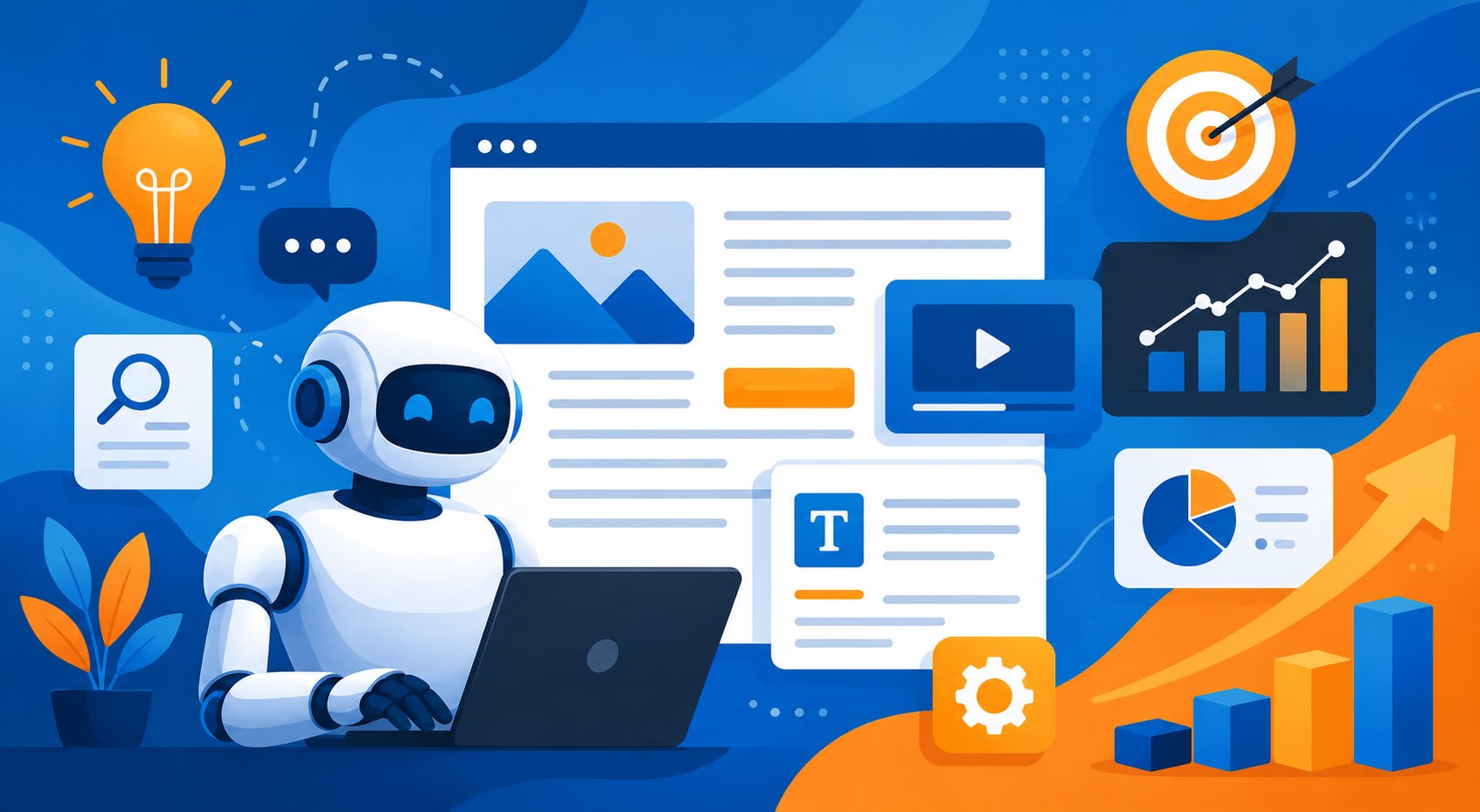
Why AI Is Reshaping Content Marketing
Content marketing is always about the right consumers, the right message. Brands produce content for educational purposes, to develop trust, to clarify products, to answer queries, and to steer people in a direction. However, the planning, production, distribution, and measurement of content is evolving very fast.
Companies are required to have more content than ever. A brand will require blog posts, social media captions, emails, short videos, advertisements, landing pages, product pages, newsletters, tutorials, and customer education. There is a difference in each platform in terms of style, format, audience behavior, and publishing rhythm.
This is a challenge for many teams to deal with on a manual basis. It's already difficult to come up with one great piece of content. It can be a lot of work to produce a lot of variations of that content on many different platforms. That's why AI is transforming content marketing. It enables teams to work faster, grasp the audience better, tailor messages to their audience, and convert ideas into multiple helpful formats.
The Growing Demand for More Content
Tools like Krisp Ai note taker can help content teams capture ideas, meeting notes, campaign feedback, and client discussions without relying on manual note-taking. This is useful because content marketing often starts with conversations: strategy calls, brainstorms, interviews, creative reviews, and planning meetings.
Content marketing is no longer limited to occasional blog posts. Brands need content for every stage of the customer journey. At the awareness stage, they may need educational articles, social posts, videos, and search-friendly guides. During consideration, they may need comparison pages, case studies, emails, webinars, and product explainers. After purchase, they may need onboarding content, support articles, tutorials, newsletters, and customer success stories.
This constant demand creates pressure. Teams need to publish often, but they also need to maintain quality. AI helps by making the content process more manageable. It can support brainstorming, drafting, editing, repurposing, research, and performance analysis, giving marketers a faster way to move from idea to published content.
AI Helps Teams Move from Ideas to Drafts Faster
One of the biggest changes AI brings to content marketing is speed at the beginning of the process. Many teams lose time before they even start writing. They may have a topic but not a structure. They may have a campaign goal but not a clear angle. They may know the audience but struggle to turn that knowledge into content.
AI tools can help reduce this blank-page problem. Marketers can use AI to brainstorm topics, create article outlines, draft social captions, generate email variations, suggest headlines, write ad copy, and build content calendars. Instead of starting from zero, teams can start with a draft or a list of options.
This does not mean the first AI output should be published as is. Content still needs editing, fact-checking, examples, brand voice, and human judgment. But AI gives marketers a starting point, and that can save a lot of time. On another note, an image enhancer can also support the visual side of content marketing by helping teams improve product photos, campaign images, blog visuals, social graphics, and website assets. As brands publish across more platforms, better visuals can make content feel more professional without requiring a full design or photography team for every update.
Better Audience Research and Content Planning
Any good content begins with understanding the audience. Brands should understand what people are asking, what issues they are faced with, what objections they have when buying things, and what language they use. Teams can leverage AI to analyze customer reviews, search queries, social media comments, support ticket history, sales call notes, surveys, and competitor content. Marketers can automate the process of sifting through hundreds of comments or reviews to find recurring questions, pain points, complaints, and content ideas.
This means that content planning is more focused. A brand might find out consumers are not certain about pricing, don't want to spend their time setting it up, or are comparing it to a specific competitor. Those insights can be transformed into blog posts, landing pages, social posts, email campaigns, or even help center articles.
AI can also be used to create clusters of topics. Instead of jumping into the creation of random posts, marketers can develop a more comprehensive content marketing plan around topics that resonate with their audience. This gives content added value and more possibilities to cross-talk between channels.
Personalization at Scale
Today's customers are looking for relevance in content. If various audiences have different goals, problems, and buying stages, a generic message may not be effective. The content a first-time visitor will see is going to be different from that of a returning customer. A small business owner may have other benefits they are interested in than an enterprise buyer.
Personalization becomes more manageable with AI, as it aids the creation of multiple variations of a text. It can be used to send out customized e-mails, product suggestions, landing page text, ad changes, client follow-up, and training materials.
For instance, a software firm could produce one e-mail for freelancers, another for agencies, and another for bigger teams. The headlines, examples, and calls to action may vary from group to group. AI can help in their development at a faster pace. But personalization isn't about intruding, it's about helping. Customers don't like feeling like they are being observed or manipulated. However, the most effective way to use AI is to create content that is more valuable and relevant, not uncomfortable.
Conclusion
AI is transforming content marketing by simplifying the research process, facilitating easier content creation, enabling content personalization on a larger scale, and optimizing content for better results. It can make teams more productive in generating content, re-publishing ideas through different outlets, simplifying processes, and gaining a better understanding of audience needs.
AI is not a standalone piece of content, however. Marketers do best when they use the speed of AI and the creativity, judgment, and customer insight of a human. Strong content teams will not be the ones publishing more generic content in 2026 using AI, but it will be their job to be careful with the use of AI to produce content that is better, more relevant, more useful, and produced at a frequency that their audience is able to follow.
Want to publish a guest post on aamax.co?
Place an order for a guest post or link insertion today.
Place an Order