

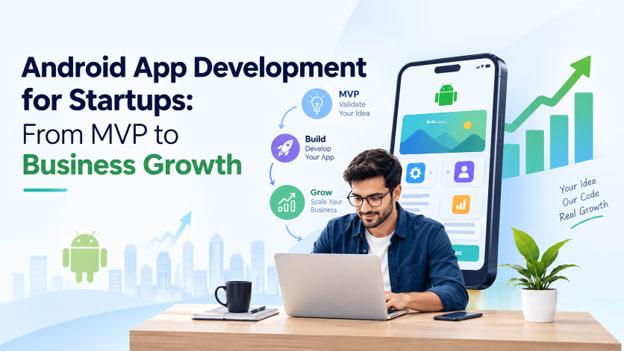
Android App Development for Startups: From MVP to Business Growth
Introduction
For startups, turning an innovative idea into a successful digital product requires careful planning, the right technology, and a clear understanding of customer needs. Android applications provide startups with an opportunity to reach a broad audience, improve customer engagement, and introduce new business models. However, building a successful application involves more than simply launching a product on the Google Play Store.
A practical approach is to begin with a Minimum Viable Product (MVP), test the idea with real users, and gradually introduce features based on feedback and business goals. With the right development strategy, startups can reduce initial risks, manage their budgets, and build applications that support long-term growth.
By investing in well-planned Android app development, startups can transform early-stage ideas into scalable digital solutions.
Why Android App Development Matters for Startups
Android applications help startups connect with customers, deliver convenient services, and establish a stronger digital presence. They also provide flexibility for businesses operating across industries such as healthcare, education, retail, finance, and entertainment.
Reaching a Large and Diverse User Base
Android has a broad global user base, making it an attractive platform for startups targeting customers across different regions and income groups. Its availability across devices at various price points allows businesses to reach users with different budgets and preferences.
Startups can use Android applications to introduce products, provide services, and expand into new markets without relying entirely on traditional business channels.
Building Stronger Customer Engagement
Mobile applications make it easier for businesses to maintain regular communication with customers. Features such as push notifications, personalized recommendations, in-app messaging, and loyalty programs can encourage users to interact with a brand more frequently.
When these features address genuine customer needs, they can improve satisfaction and help startups develop lasting relationships with their audiences.
Creating New Revenue Opportunities
An Android application can support different revenue models, including subscriptions, in-app purchases, advertising, and direct product or service sales. The most suitable approach depends on the startup's target market and business objectives.
For example, an educational startup might offer subscription-based learning plans, while an e-commerce business could generate revenue through in-app purchases.
What Is a Minimum Viable Product (MVP) in Android App Development?
A Minimum Viable Product is an early version of an application that includes the essential features needed to solve a specific customer problem. Instead of building a fully developed product immediately, startups launch a focused version to evaluate their idea and understand how users respond.
Benefits of MVP Development for Startups
MVP development allows startups to test assumptions before committing significant resources to a larger application. It helps teams identify which features customers value most and which improvements are necessary.
An MVP can also reduce development complexity, shorten the time to market, and provide valuable insights for future product decisions.
How an MVP Helps Validate a Business Idea
Consider a startup planning to launch a food delivery application. Its initial version might include restaurant listings, menu browsing, order placement, payment integration, and order tracking.
After launch, the startup can evaluate customer feedback, ordering patterns, and user retention. These findings can guide future improvements, such as scheduled deliveries, loyalty rewards, or personalized recommendations.
This approach allows startups to make decisions using actual user behavior rather than assumptions alone.
Key Steps to Build an Android App for a Startup
A structured development process helps startups manage resources efficiently and maintain a clear direction throughout the project.
Define Business Goals and Target Audience
The first step is identifying the problem the application will solve and the people it will serve. Startups should define their primary objectives, target customer profiles, expected outcomes, and key performance indicators.
Clear goals help development teams prioritize features and avoid unnecessary complexity.
Research Competitors and Market Demand
Competitor research helps startups understand existing solutions, customer expectations, and opportunities for differentiation. Reviewing application features, user ratings, and customer complaints can reveal areas where a new product could provide additional value.
Market research also helps businesses determine whether sufficient demand exists for their proposed solution.
Identify Essential Features for the MVP
Startups should distinguish between essential features and enhancements that can be introduced later. A focused feature list makes development easier to manage and helps prevent unnecessary spending.
The initial version should prioritize functionality that directly supports the application's main purpose.
Create UI/UX Designs and Prototypes
An intuitive interface helps users understand how an application works without unnecessary effort. Wireframes and interactive prototypes allow startups to test navigation, screen layouts, and user journeys before development begins.
Early design feedback can help prevent expensive changes during later development stages.
Choose the Right Android App Development Technology
Technology selection depends on the application's complexity, budget, performance requirements, and future plans. Native Android development may suit applications that require deep platform integration, while cross-platform frameworks can be useful when a startup plans to support multiple operating systems.
The development approach should support both current requirements and anticipated growth.
Develop, Test, and Launch the Application
Once planning and design are complete, developers build the application and test its functionality, security, performance, and compatibility across supported devices.
Before launch, startups should also prepare app store listings, screenshots, descriptions, and relevant privacy information. A controlled release can help identify issues before the application reaches a larger audience.
Essential Features to Include in a Startup's Android App
The right features depend on the business model, but several capabilities are valuable for many applications.
- User registration and onboarding: Make it easy for customers to create accounts and understand the application's purpose.
- Intuitive navigation: Organize screens and menus so users can complete tasks efficiently.
- Secure authentication: Protect accounts and sensitive information through appropriate authentication and authorization controls.
- Push notifications: Share relevant updates, reminders, and offers without overwhelming users.
- Analytics integration: Track user behavior and application performance to guide product improvements.
- Payment integration: Add secure payment functionality when transactions are central to the business model.
Startups do not need to implement every feature immediately. The priority should be delivering a reliable user experience while leaving room for future enhancements.
Choosing the Right Android App Development Approach
Selecting an appropriate development model can influence project costs, timelines, and long-term maintenance.
Native Android App Development
Native development uses Android-focused technologies to create applications designed specifically for the platform. It can be suitable for products that require advanced device capabilities, detailed platform integration, or specialized performance optimization.
Cross-Platform App Development
Cross-platform development allows teams to share portions of the codebase across Android and other platforms. This approach can reduce duplicated development work, although its suitability depends on the application's technical requirements.
In-House Team vs. Outsourced Development Partner
An in-house team provides direct control over daily development activities but requires investment in recruitment, infrastructure, and ongoing management.
An external development partner can provide access to specialized expertise and established development processes. Startups considering Custom Android App Development services should evaluate technical experience, communication practices, project transparency, and post-launch support before selecting a partner.
How Much Does Android App Development Cost for Startups?
Android application development costs vary according to the product's scope, design requirements, technical complexity, integrations, and testing needs.
Factors That Influence Development Costs
Applications with basic functionality generally require fewer development resources than products involving real-time communication, complex payment workflows, advanced analytics, or artificial intelligence.
The development team's location, experience, project timeline, and ongoing maintenance requirements can also affect the overall budget.
MVP Development vs. Full-Scale App Development
An MVP typically costs less than a fully featured application because it focuses on a smaller set of essential capabilities. However, the final cost depends on the actual requirements rather than the MVP label alone.
Startups should establish a realistic budget, define project milestones, and reserve resources for testing, launch activities, and future improvements.
Ways Startups Can Optimize Their Development Budget
Startups can control costs by prioritizing essential features, using existing tools where appropriate, conducting early usability tests, and avoiding unnecessary design changes. A phased development plan also allows businesses to invest in new functionality as user demand becomes clearer.
Common Android App Development Challenges for Startups
Startups may encounter several challenges while building and launching their applications.
Limited budgets can make it difficult to balance essential functionality with ambitious product ideas. Changing market requirements may also require teams to revise priorities during development.
Security and data privacy demand careful attention, particularly when applications handle financial, personal, or business information. Meanwhile, user acquisition and retention require consistent efforts beyond the initial launch.
Device compatibility and performance can introduce additional complexity because Android applications operate across a diverse range of hardware and software configurations.
Addressing these challenges early through realistic planning, regular testing, and ongoing user feedback can help startups build more reliable products.
How to Scale an Android App From MVP to Business Growth
Launching an MVP is only the beginning. Sustainable growth requires continuous improvement based on customer needs and business performance.
Collect User Feedback and Analyze App Performance
Startups should monitor reviews, support requests, analytics, and user behavior to understand what works well and where customers experience difficulties.
Prioritize Features Based on User Needs
New features should address validated customer requirements rather than being added simply to match competitors. A clear product roadmap helps teams balance improvements with development costs.
Improve App Performance and Scalability
As the number of users grows, startups may need to optimize application performance, improve backend infrastructure, and strengthen database management. Scalable architecture helps the product handle increasing demand without compromising reliability.
Integrate APIs and Third-Party Services
APIs can connect applications with payment gateways, mapping tools, analytics platforms, customer relationship management systems, and other business services. These integrations can expand functionality while reducing the need to build every capability from scratch.
Implement Effective App Marketing Strategies
App store optimization, content marketing, social media campaigns, referral programs, and targeted advertising can help startups attract relevant users. Marketing efforts should focus on reaching the right audience and demonstrating the application's practical value.
Explore Monetization and Revenue Models
As the application matures, startups can evaluate subscription plans, premium features, commissions, or other suitable revenue models. Pricing decisions should reflect customer expectations and the value the application delivers.
Key Metrics to Measure Android App Growth
Tracking meaningful performance indicators helps startups understand whether their application is moving toward its business goals.
Important metrics include:
- Downloads and active users: Measure initial reach and ongoing engagement.
- User retention and churn: Understand how many users continue using the application and how many stop.
- Conversion rate: Track how effectively users complete important actions, such as registrations or purchases.
- Customer acquisition cost: Estimate the average cost of acquiring a customer.
- Customer lifetime value: Assess the revenue or business value generated throughout a customer relationship.
- Ratings and reviews: Identify customer satisfaction levels and opportunities for improvement.
These metrics should be evaluated together. A high number of downloads, for example, does not necessarily indicate long-term success if users rarely return.
How to Choose the Right Android App Development Company for a Startup
Choosing the right development partner can influence the application's quality, delivery timeline, and ability to scale.
Startups should review a company's portfolio, technical expertise, and experience building MVPs for businesses with similar requirements. They should also evaluate communication practices, project management methods, security standards, and post-launch maintenance services.
A reliable partner will help prioritize features, explain technical trade-offs, and provide realistic project estimates. Clear agreements about deliverables, ownership, timelines, and ongoing support can also reduce misunderstandings.
The goal is to find a development partner that understands the startup's business objectives rather than simply delivering a list of technical features.
Future Trends in Android App Development for Startups
Emerging technologies continue to create new opportunities for startups. Artificial intelligence can support personalized recommendations, intelligent assistants, and automated workflows. Cloud infrastructure can help applications manage changing workloads, while stronger security practices protect users and business data.
Startups can also benefit from data-driven personalization and improved accessibility. However, adopting a trend should depend on its practical value, implementation costs, and relevance to the target audience.
Conclusion
Android app development gives startups a practical way to validate business ideas, reach customers, and create new revenue opportunities. Beginning with an MVP helps businesses test assumptions, gather feedback, and focus resources on features that provide genuine value.
As the application grows, startups can improve performance, introduce relevant features, strengthen marketing, and refine their monetization strategies. The right technology choices and development partner can support this journey while keeping long-term objectives in focus.
By combining customer-focused planning with continuous improvement, startups can turn an initial Android application into a scalable digital product that supports sustainable business growth.
Frequently Asked Questions (FAQs)
How much does it cost to develop an Android app for a startup?
The cost depends on the application's features, complexity, design, integrations, and development team. Starting with an MVP can help startups manage initial expenses.
How long does it take to build an Android app MVP?
The timeline varies with project scope, team size, and technical requirements. A focused MVP may take several weeks to a few months to design, develop, test, and launch.
Why should startups start with an MVP?
An MVP helps startups validate demand, collect real user feedback, reduce early development risks, and prioritize future investments.
Should a startup choose native or cross-platform Android app development?
Native development can be suitable for platform-specific functionality and demanding performance requirements. Cross-platform development may be appropriate when supporting multiple platforms efficiently is a priority.
How can startups scale an Android app after launch?
Startups can scale by analyzing user feedback, improving performance, introducing validated features, strengthening infrastructure, and investing in effective user acquisition and retention strategies.
Want to publish a guest post on aamax.co?
Place an order for a guest post or link insertion today.
Place an Order